


A gelcoat that chalks and dulls is annoying. A blister you ignore for two seasons is a repair bill. Good marine fiberglass maintenance is mostly about catching the small stuff before water, UV, and salt turn it into structural work. The composite parts that make up a hull, deck, and hardware are built to last decades, and our marine fiberglass components routinely do, but only when the surface that protects the laminate is cared for.
Whether you manage a fleet or a single vessel, the routine is the same and it is not complicated. Here is what actually degrades marine fiberglass, a maintenance rhythm that keeps it strong, and how to catch structural trouble while it is still cheap to fix.
In this article
What actually degrades marine fiberglass
Fiberglass itself is remarkably durable. What ages is usually the gelcoat, the thin resin-rich layer that gives the surface its color and shields the laminate. Understand the enemies and the whole maintenance routine makes sense.
- UV exposure: sunlight breaks down the gelcoat surface, causing the chalky, faded look called oxidation.
- Water intrusion: if the gelcoat is breached, water can seep into the laminate and, over time, cause osmotic blistering below the waterline.
- Salt and grime: salt crystals and dirt are abrasive and hold moisture against the surface.
- Flex and impact: docking knocks and constant flexing can craze the gelcoat and open hairline cracks.
- Neglected hardware: fittings and through-hulls that leak let water reach the core, the most expensive failure of all.
Did you know
Oxidation is not permanent damage. The chalky, faded surface on a neglected hull is usually just degraded gelcoat that can be compounded and polished back to a shine. Left too long, though, the gelcoat thins to the point where only paint or new gelcoat will restore protection.
A marine fiberglass maintenance routine
The steps below are general guidance for routine surface care of marine fiberglass. They are not a substitute for professional structural assessment or repair. Compounds, solvents, and any resin or gelcoat products involve chemicals and airborne particulate that require ventilation, eye and skin protection, and handling per each product’s safety data sheet. Below-waterline blistering and any suspected core or structural damage should be evaluated by a qualified marine professional. BLG Fiberglass is not liable for outcomes from work attempted based on this article. Always follow the product SDS.
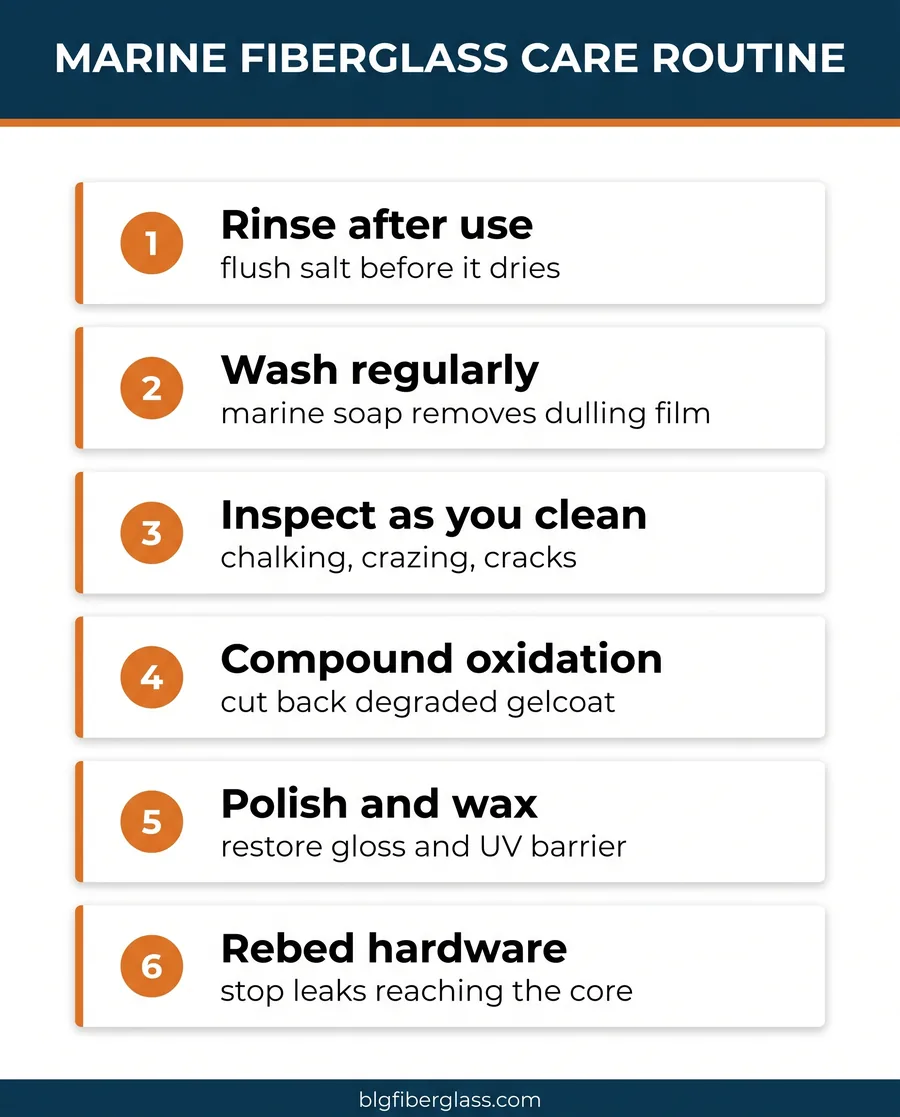
- Rinse after every use. Flush salt, grime, and debris off with fresh water before it dries and etches the surface.
- Wash regularly with a marine soap. A gentle wash removes the film that dulls gelcoat and holds moisture.
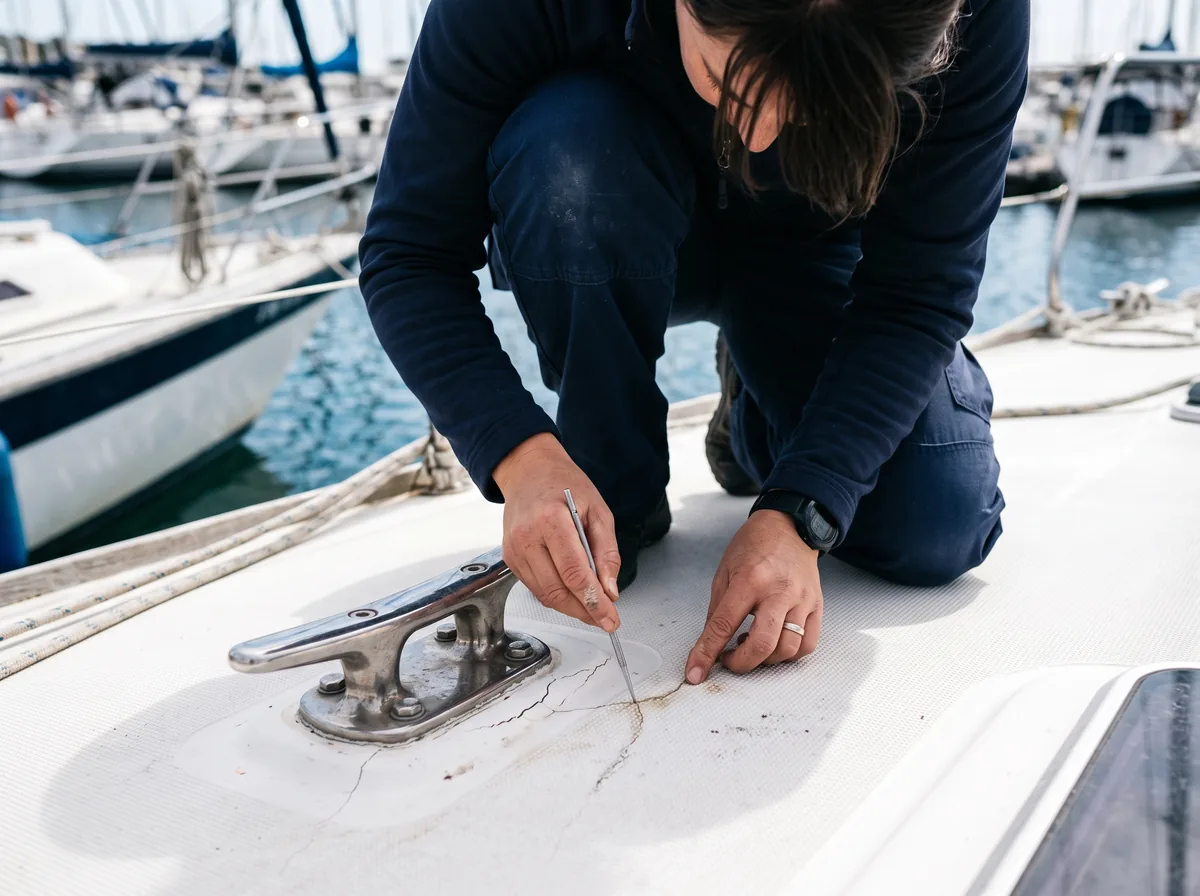
- Inspect as you clean. Run your hand over the surface and look for chalking, crazing, cracks, and any weeping around fittings.
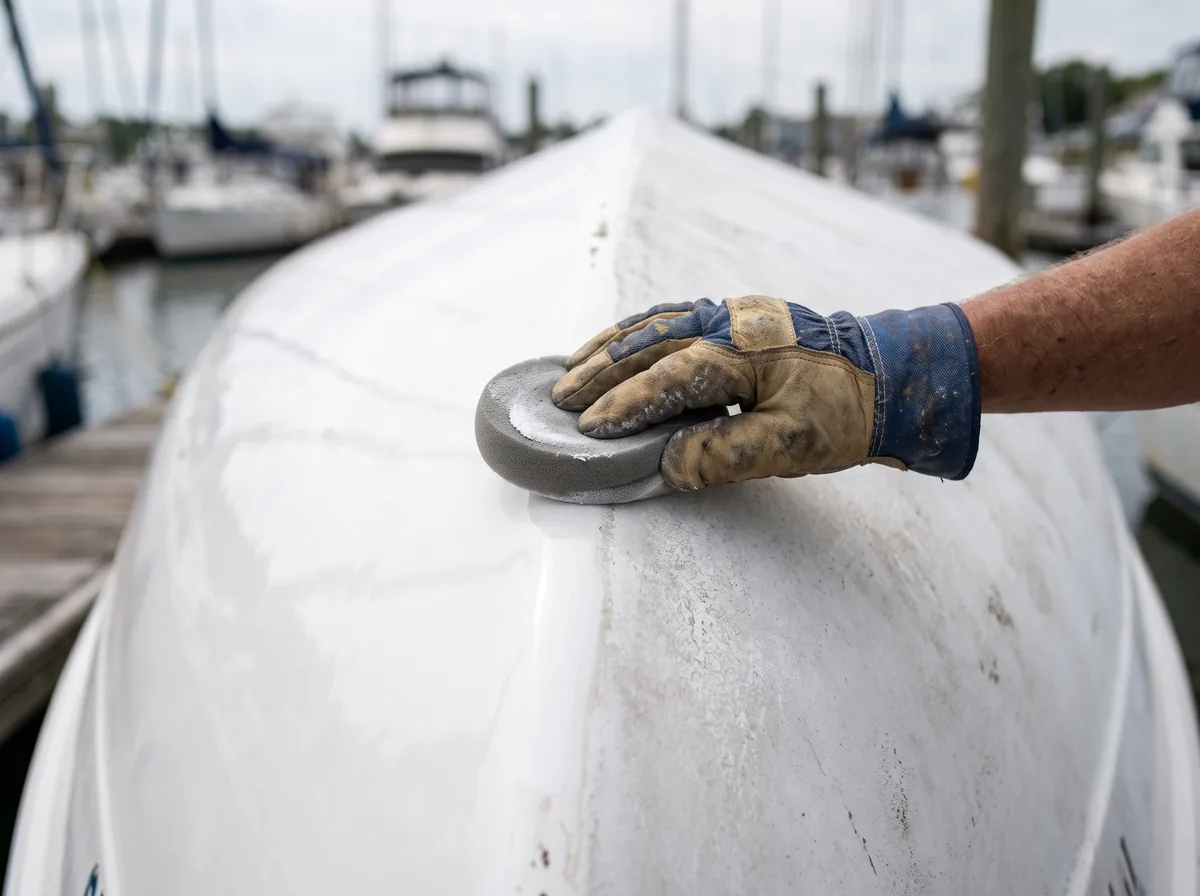
- Compound oxidized areas. Where the surface has chalked, use a marine compound to cut back the degraded gelcoat to fresh material.
- Polish and wax. Follow with polish, then a quality marine wax, to restore gloss and lay down a sacrificial UV barrier.
- Reapply wax through the season. One coat in spring is not enough. Refresh it every few months and after heavy use.
- Seal and bed hardware. Rebed leaking fittings and through-hulls promptly so water cannot reach the laminate or core.
Pro tip
Wax is cheap insurance. A fresh coat of marine wax is the single most cost-effective thing you can do, because it takes the UV and salt hit so the gelcoat does not. Skipping wax to save an afternoon is how a bright hull becomes a chalky compounding job a year later.
Catching structural damage early
Surface care keeps a boat looking good. Structural inspection keeps it safe. The difference between a cheap fix and a major repair is almost always how early you catch it. A few signs deserve immediate attention rather than a note for next season.
Below the waterline, look for blisters in the gelcoat, which signal water has reached the laminate. On deck, tap suspicious areas and listen: a dull, dead thud instead of a sharp ring can indicate delamination or a wet core. Around fittings and high-stress corners, watch for star cracks and weeping stains. If the laminate itself is damaged, our overview of common fiberglass repair techniques explains what proper repair involves. The boating-safety resources from BoatUS are also a solid reference for owners.
Red flag: soft spots and dull thuds
A deck or hull area that flexes underfoot or returns a dull, hollow sound when tapped is a warning of delamination or a saturated core. This is not cosmetic. Water in the core spreads, freezes, and destroys the bond between skins. Get it assessed before it turns a patch into a section rebuild.
Seasonal and storage care
Maintenance is not evenly spaced through the year. A simple seasonal rhythm keeps marine fiberglass ahead of the damage rather than chasing it.
| Season | Focus | Key tasks |
|---|---|---|
| Spring | Recommission | Full wash, compound and polish, fresh wax, inspect gelcoat and fittings |
| Summer | Maintain | Rinse after use, wash regularly, refresh wax midseason |
| Fall | Protect | Deep clean, inspect for the season’s damage, wax before layup |
| Winter | Store dry | Cover and ventilate, keep water off the surface, check for pooling |
People often ask: how often should I wax a fiberglass boat?
At least twice a season for a boat in regular use, and more in strong sun or salt water. A good approach is a thorough compound, polish, and wax in spring, then a fresh wax coat every couple of months and after heavy use. The wax is sacrificial, so once water stops beading on the surface, it is time to reapply.
“Ignored a couple of small blisters for two seasons because the boat still looked fine. That laziness turned a weekend gelcoat job into a full below-waterline peel. Catch them early.”
Boat owner, sailing forum
Download the free quick guide
A one-page seasonal checklist to keep marine fiberglass durable and looking sharp.
Frequently Asked Questions
Well-built marine composites reward the owner who keeps up with them. BLG Fiberglass manufactures and supports durable marine fiberglass components for builders and operators across projects in Canada, the Norfolk area, and boatbuilders around Charleston. Talk to our team about marine parts built to last and easy to maintain.
