

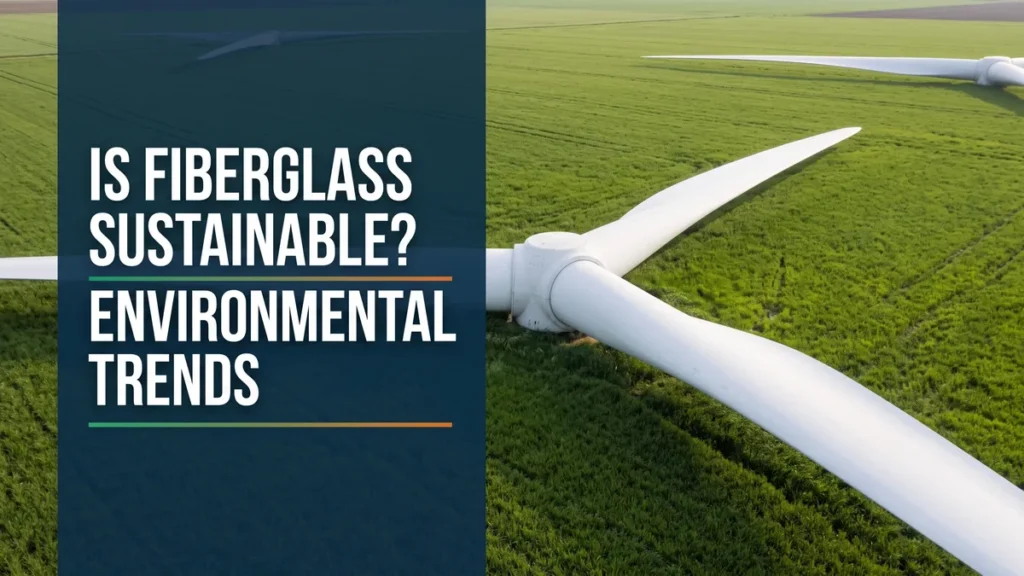
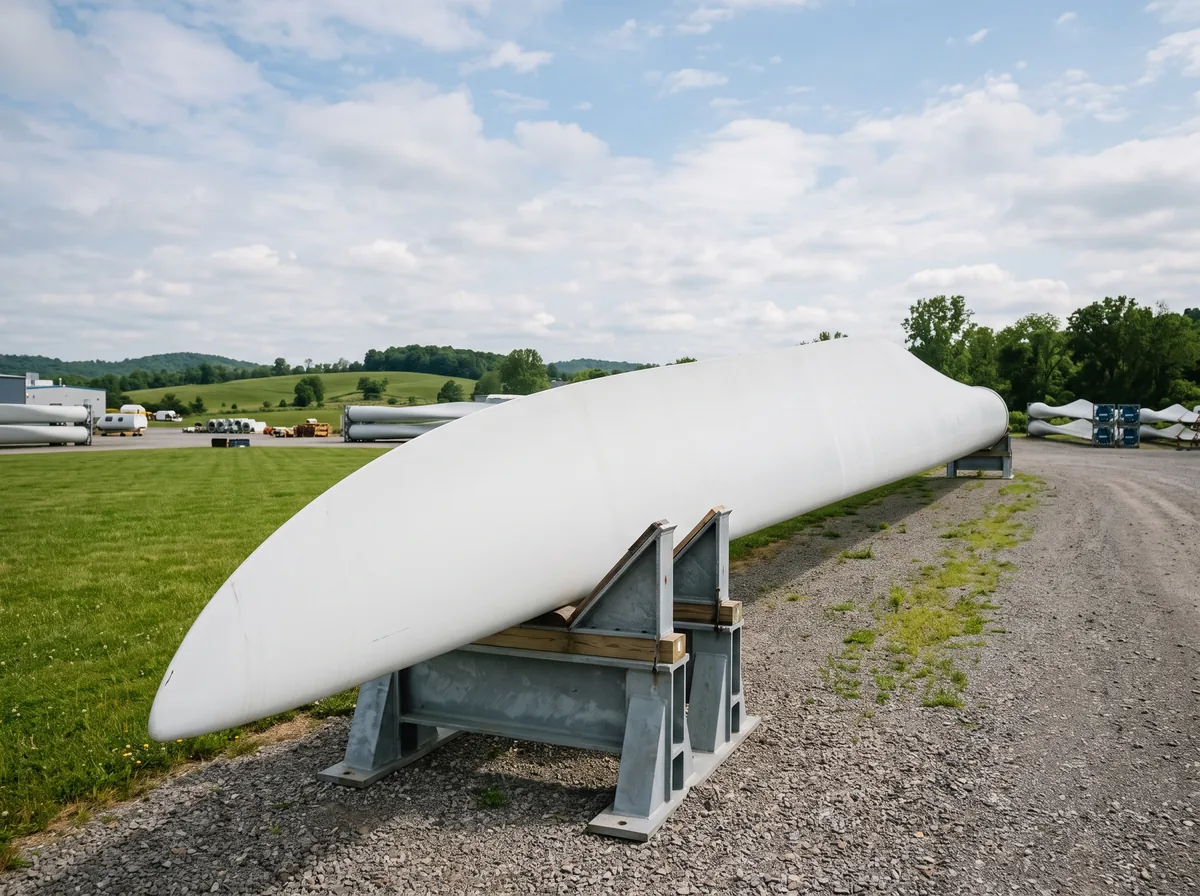
Is fiberglass sustainable? The honest answer has two halves that are both true. Glass reinforced composites cut weight, outlast the metals they replace, and make clean energy possible, yet they are genuinely hard to recycle at end of life. Any credible look at fiberglass sustainability has to hold both facts at once. It shows up clearly in the fiberglass wind turbine components that generate carbon-free power for decades and then pose a real disposal question when a blade is retired.
For manufacturers and buyers, the useful question is not whether fiberglass is perfectly green. Nothing is. It is where composites help the environment, where they fall short, and what is changing fast enough to matter over the life of a product you design today.
In this article
The honest answer on fiberglass sustainability
Sustainability is a lifecycle question, not a single number. A material can have a heavy manufacturing footprint and still be the greener choice once you count the decades it spends in service saving energy and avoiding replacement. Fiberglass sits squarely in that category. The energy that goes into making glass fiber is real, but so is the fuel a lighter vehicle saves every mile and the corrosion-driven replacements a composite tank never triggers.
Where it struggles is disposal. Thermoset composites cure into a permanent cross-linked structure that will not melt and reflow the way a thermoplastic does. That durability is a strength in service and a headache at end of life. Both things are true, and pretending otherwise helps no one.
Quick take
Fiberglass usually wins on the use phase through weight savings, long service life, and corrosion resistance. It loses points at end of life because thermoset composites are hard to recycle. The full picture is a trade-off, not a verdict.
Green points people overlook
The environmental case for composites lives in the years a part spends working, and it is stronger than most critics assume.
- Lightweighting: replacing metal with composite cuts vehicle and equipment weight, which lowers fuel burn and emissions across the whole service life.
- Longevity: fiberglass resists corrosion and fatigue, so parts last longer and get replaced less often, avoiding the footprint of remanufacture.
- Clean energy enabler: wind turbine blades depend on glass composites, and the carbon they help avoid dwarfs their own footprint.
- Corrosion resistance: composite tanks, ducts, and piping skip the coatings, cathodic protection, and replacement cycles that steel demands.
- Design efficiency: parts can be consolidated, cutting fasteners, joints, and the material waste of complex metal assemblies.
None of this erases the end-of-life issue, but it reframes it. A blade that runs for 20 years displacing fossil generation is not a net negative because recycling it is hard. The math still favors the composite. Our roundup of current composite industry trends tracks how these gains keep compounding.
Did you know
A wind turbine typically offsets the energy used to build it, blades included, within under a year of operation, then runs for two decades more. The service-life benefit is what makes the end-of-life challenge worth solving rather than a reason to avoid the material.
The recycling problem and what is changing
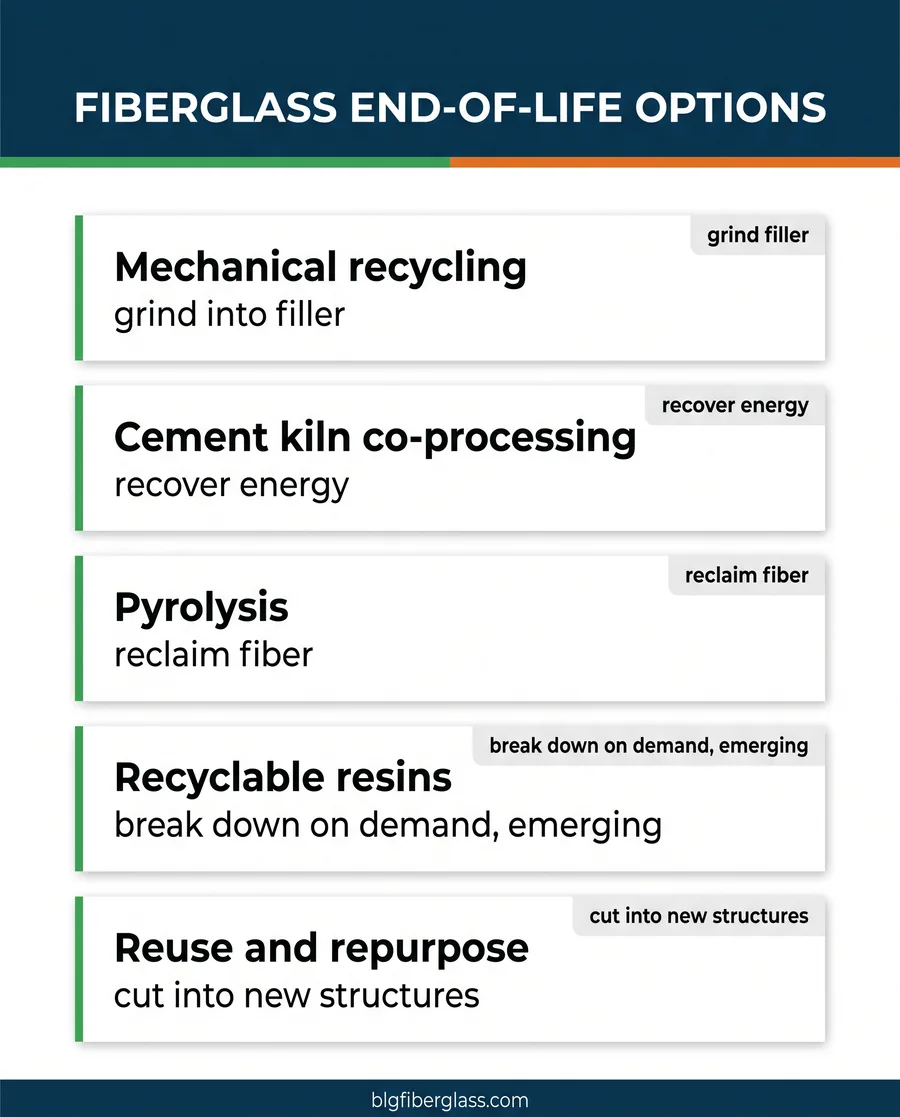
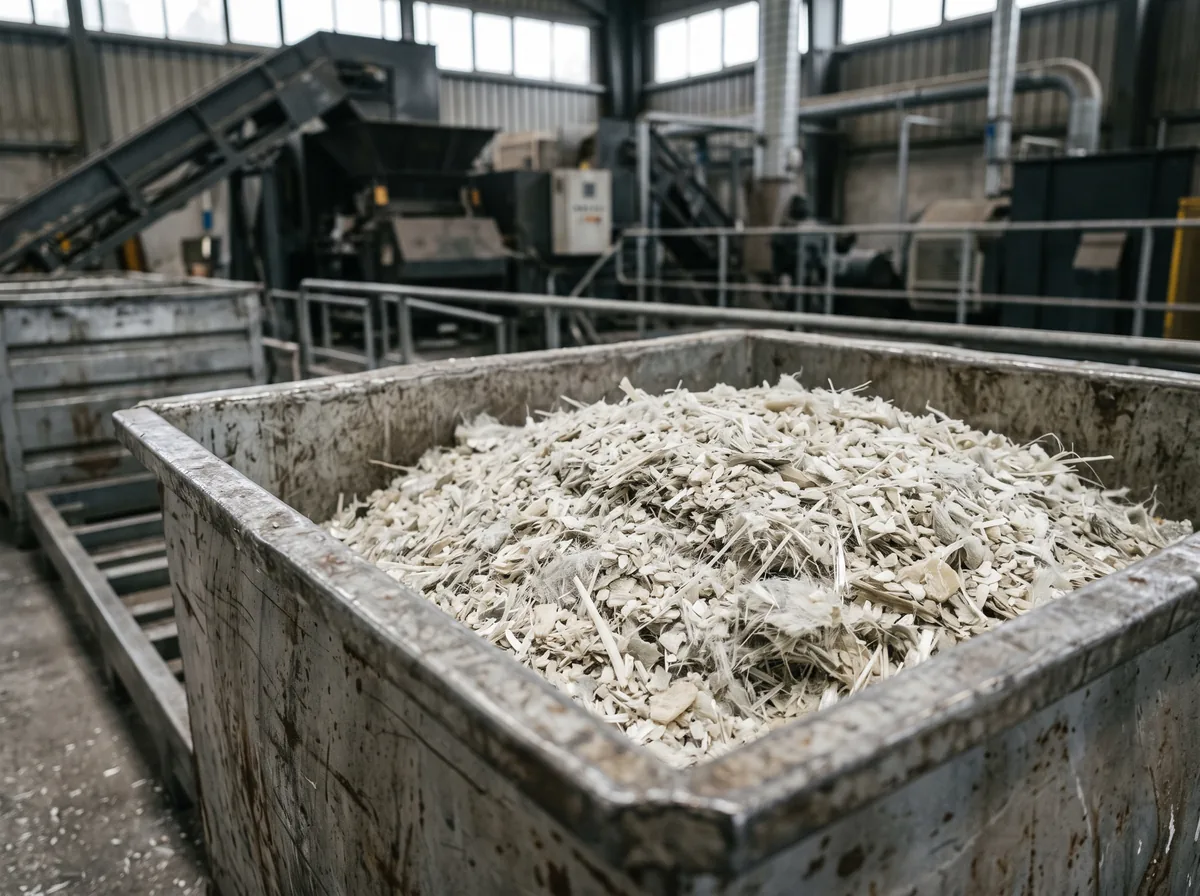
Here is the hard part stated plainly. Because thermoset fiberglass does not melt, you cannot simply grind and remold it into the same product. For years that meant most retired composite went to landfill. That is shifting, and there are now several real end-of-life routes, each with trade-offs.
| End-of-life route | How it works | Trade-off |
|---|---|---|
| Mechanical recycling | Grind into filler for new composites, concrete, or panels | Lower-value use, limited fiber recovery |
| Cement kiln co-processing | Burn as fuel and bind ash into cement | Recovers energy, not the fiber |
| Pyrolysis | Heat to reclaim glass or carbon fiber | Energy intensive, fiber loses some strength |
| Recyclable resins | New thermoset chemistries designed to break down | Emerging, not yet mainstream |
| Reuse and repurpose | Cut retired parts into new structures | Niche, case by case |
Momentum is building on the chemistry side too. Researchers and resin makers are developing thermoset systems engineered to depolymerize on demand, which would let the fiber be reclaimed cleanly. Trade bodies like the composites industry sustainability community and public programs such as the EPA sustainable materials management initiative are pushing the whole lifecycle forward.
Pro tip
If end-of-life matters to your customers, design for it now. Documenting the resin system, avoiding unnecessary material mixing, and keeping parts separable makes future recycling far more feasible than a bonded assembly of mixed chemistries ever will be.
Environmental trends reshaping composites
The direction of travel is clear even where the destination is not. A handful of trends are steadily improving the environmental profile of fiberglass manufacturing.
- Bio-based and recycled-content resins that cut the fossil input of the matrix.
- Closed-mold processes that capture styrene emissions and improve worker safety over open molding.
- Recyclable and reprocessable thermoset chemistries moving from lab to pilot scale.
- Growing markets for reclaimed glass fiber as filler and reinforcement in second-life products.
- Lifecycle assessment becoming a standard part of material selection, not an afterthought.
People often ask: is fiberglass worse for the environment than steel or aluminum?
Not usually, once you count the full lifecycle. Producing steel and aluminum carries a heavy carbon footprint of its own, and metal parts often need coatings and more frequent replacement. Fiberglass typically wins during the long use phase through lighter weight and corrosion resistance. Its weak point is end-of-life recycling, which is where metals still hold an edge.
What manufacturers can do now
You do not have to wait for perfect recycling to make better choices. Specify resins with recycled or bio-based content where the application allows, favor closed-mold processes that cut emissions, design parts for longevity and eventual separation, and ask suppliers about reclaimed-fiber options. Small decisions at the design stage compound across thousands of parts and a twenty-year service life.
“We stopped arguing about whether composites are green and started designing for the whole lifecycle. Longer service life and a documented resin system did more for our footprint than any single swap.”
Composites sustainability lead, industry panel
Download the free quick guide
A one-page reference on the lifecycle trade-offs and end-of-life options for fiberglass.
Frequently Asked Questions
Designing composite parts with the full lifecycle in mind is becoming a competitive advantage, not just good citizenship. BLG Fiberglass helps manufacturers spec durable, efficient composite components across projects in Canada, the Portland area, and operations around Minneapolis. Start a conversation with our team about building parts that perform and last.
