

Not all composite materials are created equal. When engineering a structural component, the specific variant of reinforcement you choose directly affects tensile strength, weight, production cost, and long-term durability.
This technical guide covers the primary categories of reinforcement used in industrial manufacturing, the chemical distinction between raw threads and cured composites, and how to match the right structural properties to your engineering requirements.
Glass Fiber vs. Fiberglass: What Is the Difference?
The two terms are often used interchangeably, but they refer to completely different stages of the manufacturing process.
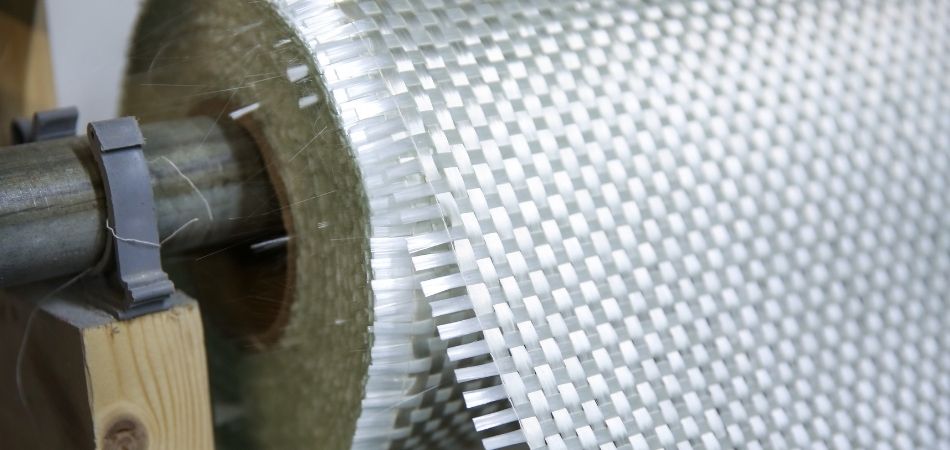
Glass fiber is the raw material — ultra-fine extruded strands of silica, typically only a few microns in diameter. On its own, the raw thread is lightweight, highly flexible, and extremely strong in tension. It is manufactured in dry forms such as chopped bundles, woven mats, and continuous rovings.
Fiberglass is the finished, cured composite material. This occurs when the dry fibers are completely saturated with a liquid binding resin (such as polyester, epoxy, or vinyl ester) and allowed to catalyze. The cured resin locks the flexible threads into a rigid, impenetrable structure.
| Feature | Raw Material (Thread) | Cured Composite |
|---|---|---|
| Composition | Pure extruded silica strands | Strands encapsulated in polymer resin |
| Physical State | Flexible mats, dry fabrics, rovings | Rigid, load-bearing sheets |
| Malleability | Extremely high | Zero (rigid once fully catalyzed) |
The 5 Main Structural Categories
1. Chopped Strand Mat (CSM)
Chopped Strand Mat is manufactured from short, overlapping strands randomly oriented and held together with a dissolvable styrene binder. When saturated with liquid resin, the binder melts, allowing the mat to conform to complex molds.
- Engineering Profile: Creates a solid, isotropic laminate with uniform strength distribution in all directions.
- Technical Benefits: Builds layer thickness very rapidly, offers high resistance to moisture penetration, and is highly cost-effective for high-volume layups.
2. Woven Roving
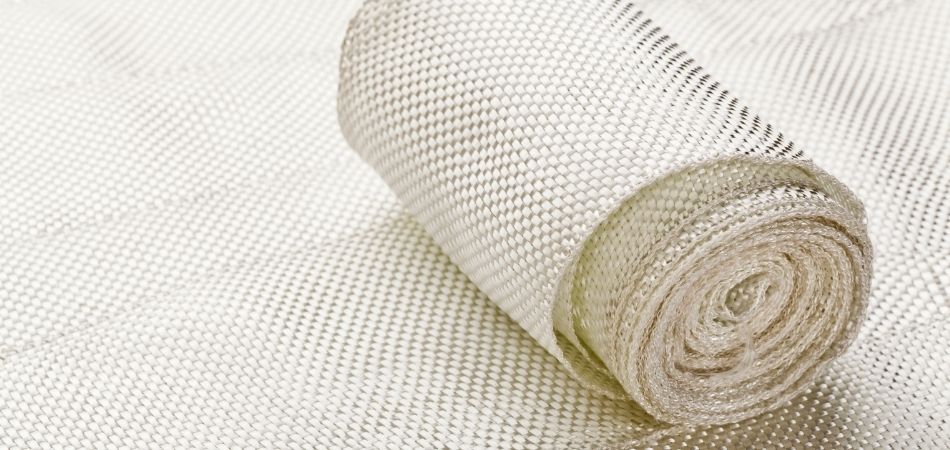
Woven Roving is constructed from continuous heavy strands woven into a 90-degree coarse fabric. It provides massive tensile strength along the specific X and Y axes of the weave.
- Engineering Profile: Designed for parts that carry heavy, predictable mechanical loads in specific directions.
- Technical Benefits: Superior directional strength, minimal resin absorption (lowering overall weight), and pairs perfectly when sandwiched between layers of CSM.
3. Fine Woven Cloth
Woven from ultra-fine threads into a smooth, tight textile. It is significantly thinner and more refined than coarse roving.
- Engineering Profile: The preferred choice when aesthetic surface finish and minimal weight are just as important as structural integrity.
- Technical Benefits: Leaves a perfectly smooth, paintable surface with minimal texture print-through, and conforms easily to sharp 90-degree mold corners.
4. Hybrid Continuous Strand Mat
This hybrid reinforcement combines continuous looping threads with randomly oriented chopped strands. The result is a highly complex, multi-directional reinforcement matrix.
- Engineering Profile: Designed for components subjected to chaotic, multi-directional impact stresses and dynamic loading.
- Technical Benefits: Exceptional resistance to micro-cracking, impact deformation, and fatigue failure.
5. Specialty Grades: E, S, and C Series
Base compositions are engineered for highly specific environmental exposures:
- E-Series (Electrical): The global industry standard. Offers excellent mechanical properties and superior electrical insulation.
- S-Series (Structural): Engineered to be approximately 40% stronger in tensile strength than standard variants. Strictly utilized in high-performance applications where extreme weight savings are critical.
- C-Series (Chemical): Formulated with specific chemical sizing to resist degradation in highly acidic or alkaline environments.
Work With BLG on Your Next Project
BLG Fiberglass is an industry leader in composite engineering and manufacturing. Our technical team can advise on exact material specifications, complex mold design, and resin-to-fiber ratios from your first consultation through to final delivery.
If you are comparing fiberglass manufacturers for a US order, BLG handles the customs paperwork, duty treatment and freight into the US.
