

In this article
- Why fiberglass mold costs vary so much
- Simple molds: $5,000 to $20,000
- Mid-complexity molds: $20,000 to $80,000
- Large and complex molds: $80,000 to $250,000+
- The factors that drive tooling cost
- How to build a realistic tooling budget
- The cost vs. quality tradeoff in fiberglass tooling
- Frequently asked questions
A basic fiberglass mold for a simple flat panel can cost $5,000. A precision multi-cavity closed mold for a structural automotive component can cost $200,000 or more. Both are fiberglass molds. The price difference is not fabricator markup, it is geometry, material, and process complexity doing what they always do to tooling budgets.
This guide breaks down fiberglass mold cost by complexity tier, identifies the specific factors that move a quote from the low end to the high end of any range, and explains what buyers can do to keep tooling budgets under control without sacrificing mold quality. All ranges on this page are based on typical North American market rates as of 2026.
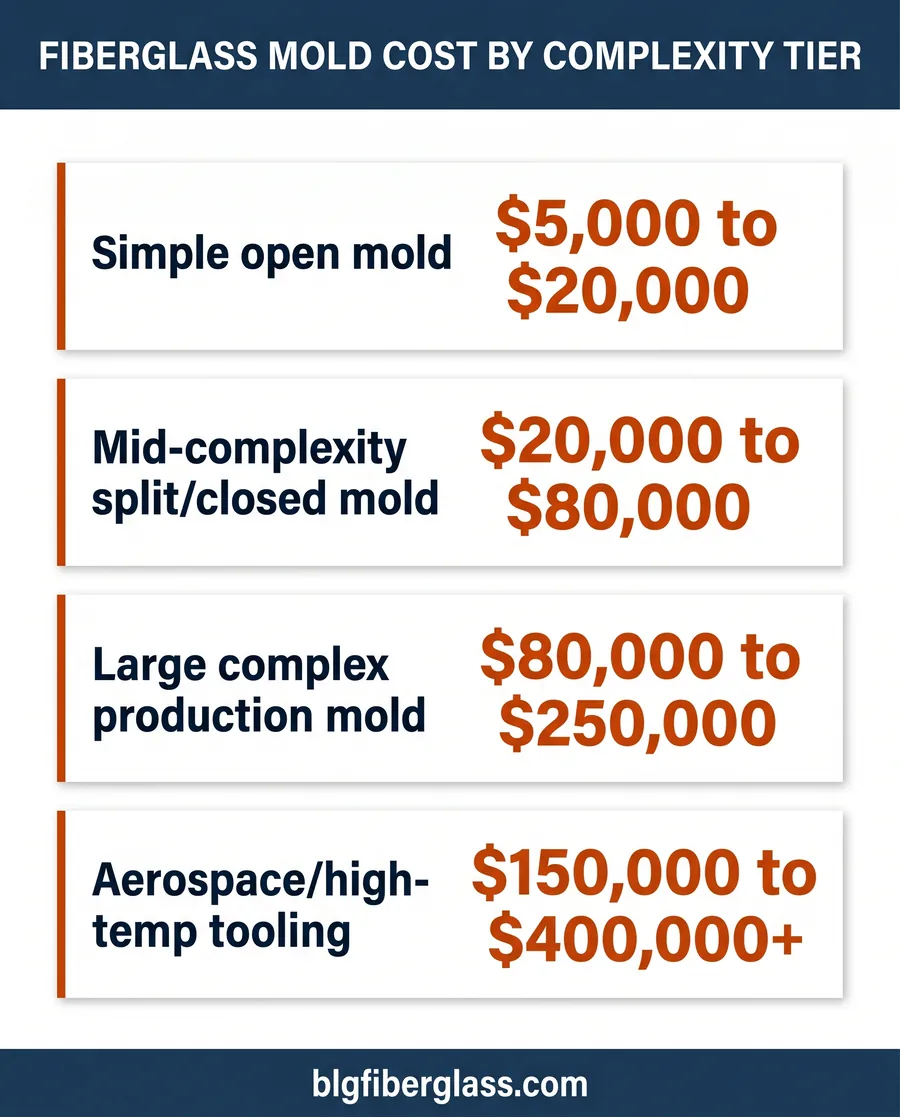
Fiberglass mold costs typically range from $5,000 to $20,000 for simple open molds, $20,000 to $80,000 for mid-complexity closed or split molds, and upwards of $80,000 to $250,000+ for large, high-precision, or multi-cavity production tooling. The final price is primarily driven by geometric complexity, mold life expectations (number of pulls), and the chosen fabrication process.
Pricing note: The cost ranges on this page reflect typical market rates for custom fiberglass tooling and fabrication as of 2026. Actual quotes vary significantly based on mold complexity, part geometry, material selection, production volume, and supplier location. Always request itemized quotes from multiple fabricators before committing to a project.
Why fiberglass mold costs vary so much
Tooling cost is not a linear function of part size. A large but geometrically simple mold can be cheaper than a small mold with complex undercuts, tight tolerances, or specialized surface requirements. The fabricator is pricing labor hours, and labor hours are determined by complexity far more than by raw dimensions.
The second variable most buyers underestimate is the number of production pulls expected from the mold. A prototype mold intended for 5 to 10 parts can be built to a different standard than production tooling expected to yield 500 or 5,000 pulls over its service life. Building production-grade tooling when you only need a handful of prototypes is expensive. Building prototype-grade tooling for production volume is a different kind of expensive when the mold degrades ahead of schedule.
People often ask
What is the typical fiberglass mold cost for a production part? For most industrial production molds in the $50,000 to $150,000 range, the tooling cost is typically recovered across the first 200 to 500 production parts depending on part pricing. That amortization calculation is worth doing before deciding how much to invest in mold longevity.
Simple molds: $5,000 to $20,000
Simple molds cover flat or gently curved single-surface open molds with straightforward draft angles and no undercuts. Typical examples include flat panel molds, basic enclosure lids, shallow trays, and simple housings where the part releases vertically without any draft complications.
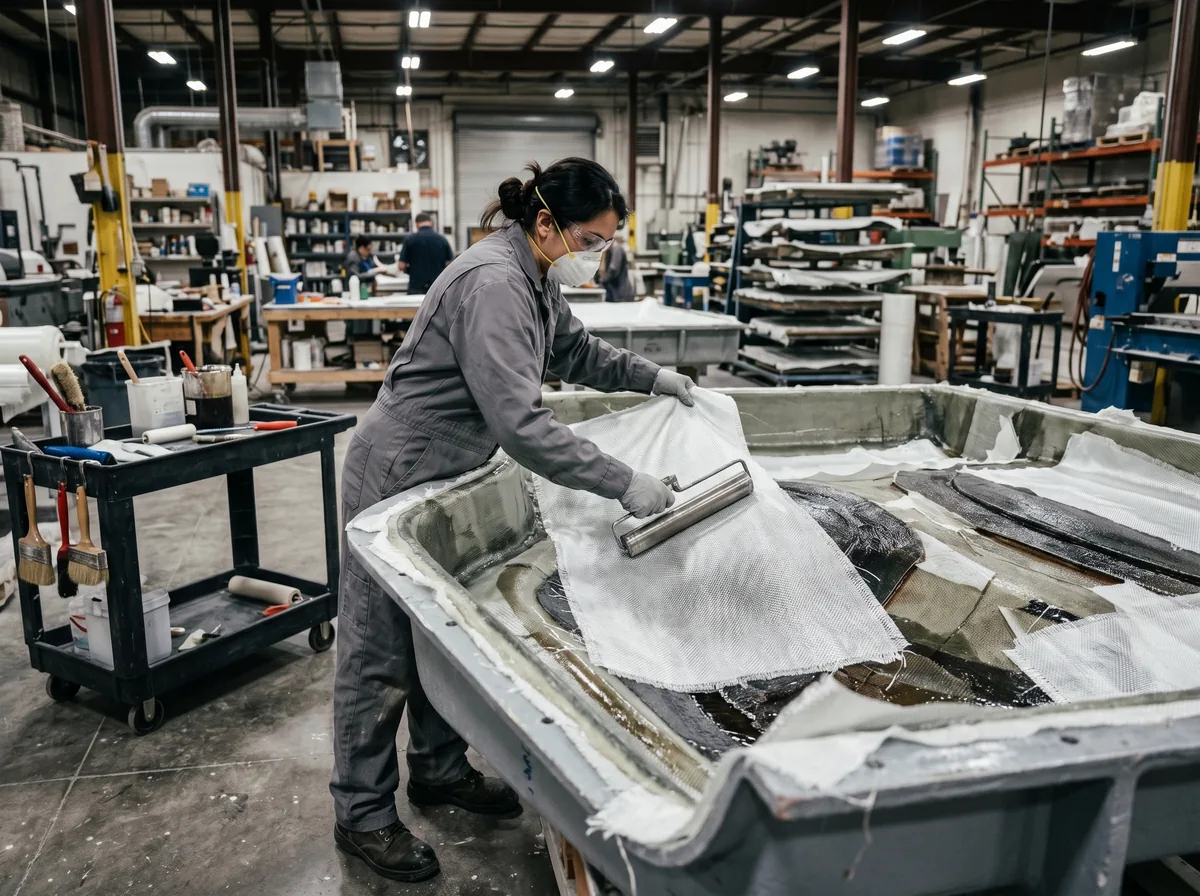
These molds are typically built with tooling gel coat over a hand-laminated plug, using polyester or vinyl ester resin systems and conventional woven or chopped strand mat reinforcement. Surface finish is typically Class B or C. Lead time runs 3 to 6 weeks from plug approval.
| Mold type | Typical cost range | Expected pulls |
|---|---|---|
| Flat panel mold (single surface) | $5,000 to $12,000 | 100 to 500+ |
| Simple open mold, basic geometry | $8,000 to $20,000 | 200 to 800+ |
| Prototype mold, short-run tooling | $5,000 to $15,000 | 5 to 50 |
| Shallow tray or housing mold | $10,000 to $20,000 | 150 to 600 |
Mid-complexity molds: $20,000 to $80,000
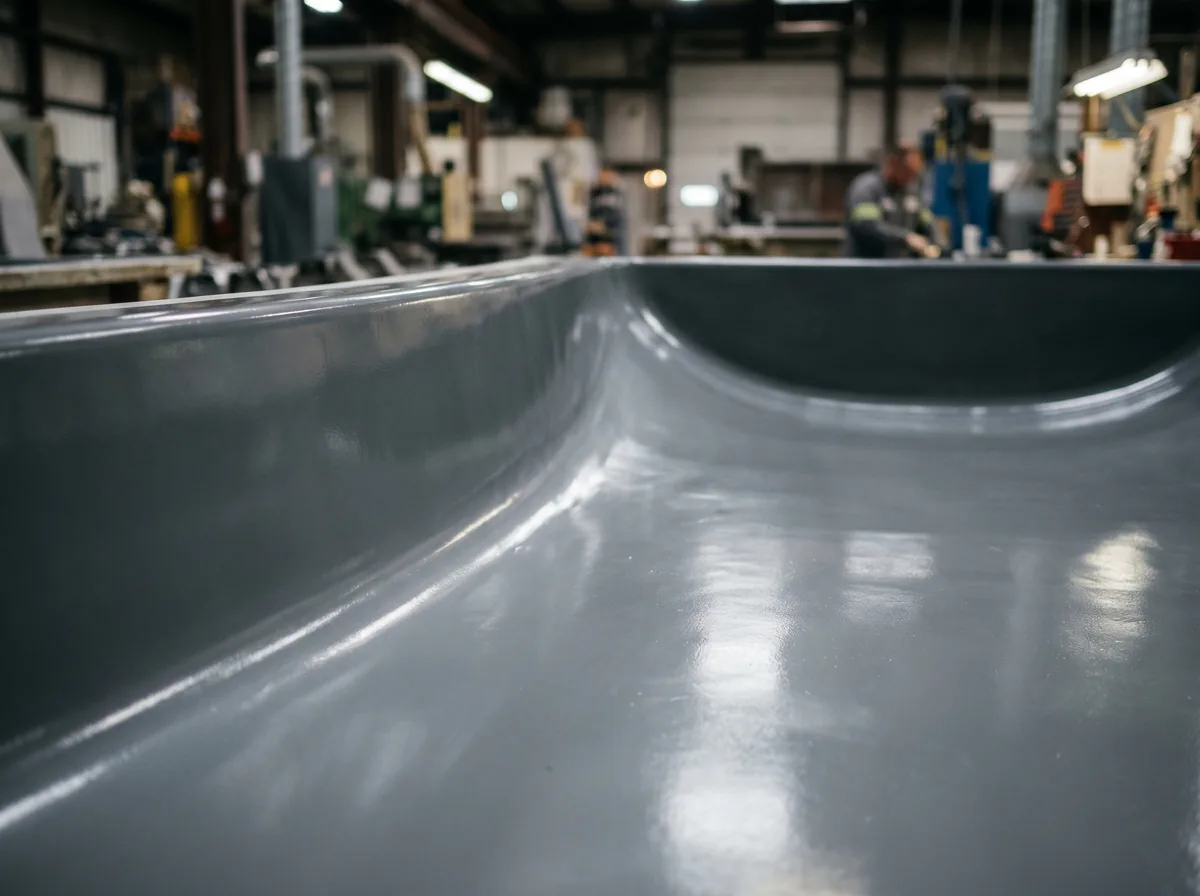
Mid-complexity tooling covers the majority of industrial fiberglass projects: parts with compound curves, moderate geometric complexity, parting line decisions that require planning, and surface finish requirements of Class A or B. This tier also includes split molds, two-piece molds with registration features, and molds requiring gel coat uniformity for aesthetically visible parts.
For closed-mold processes like RTM or LRTM, even modest part complexity pushes tooling into this range because both mold halves must maintain consistent resin flow paths and sealing surfaces. The additional engineering and machining for flow channels and seal grooves adds $8,000 to $25,000 to the tooling cost versus an equivalent open-mold tool.
| Mold type | Typical cost range | Expected pulls |
|---|---|---|
| Two-piece split mold with registration | $22,000 to $50,000 | 300 to 1,000+ |
| RTM/LRTM closed mold, moderate geometry | $35,000 to $80,000 | 500 to 2,000+ |
| Class A surface mold, compound curves | $25,000 to $65,000 | 300 to 1,200 |
| Structural FRP enclosure with flanges | $20,000 to $45,000 | 200 to 800 |
Large and complex molds: $80,000 to $250,000+
High-complexity tooling at this price point typically involves: large surface area with tight dimensional tolerances across the full tool, multi-cavity configurations, undercuts that require loose pieces or side-pull mechanisms, Class A finish requirements with integrated gel coat application features, or hybrid tooling that incorporates steel inserts for wear surfaces or registration pins.
Aerospace-grade composite tooling and autoclave-cure molds occupy the upper end of this range and beyond. These tools are built from carbon fiber reinforced tooling laminates with controlled thermal expansion coefficients, and they require significantly more engineering input, material cost, and post-fabrication verification than conventional fiberglass tooling.
| Mold type | Typical cost range | Notes |
|---|---|---|
| Large structural mold (>4m), moderate complexity | $80,000 to $150,000 | Surface area driven |
| Multi-cavity production tool | $90,000 to $200,000 | Cavity count multiplier |
| Mold with side-pull or loose pieces | $70,000 to $180,000 | Mechanism complexity |
| Autoclave-cure or high-temp tooling | $120,000 to $300,000+ | Material cost driven |
| Carbon fiber tooling laminate mold | $150,000 to $400,000+ | Engineering intensive |
The factors that drive tooling cost
Tooling quotes reflect a fabricator’s estimate of hours and materials. Understanding what drives each helps buyers have better conversations about cost and scope.
- Geometry complexity. Compound curves, undercuts, tight internal radii, and parting line geometry that requires engineering all add hours directly.
- Surface finish class. Class A surfaces require more tooling coat preparation, more intermediate inspection steps, and more finishing labor than Class B or C.
- Mold life expectation. A tool intended for 2,000 production pulls requires heavier laminate schedules, more reinforcement in high-stress zones, and typically a stiffening structure. All of these add material and labor.
- Process type. Open mold tooling is simpler and cheaper than matched closed-mold tooling for RTM or compression molding. Closed-mold tools require engineering for flow paths, sealing surfaces, and injection port placement.
- Resin system. Polyester tooling resins are cheaper than vinyl ester, which is cheaper than epoxy. High-temperature tooling using Bismaleimide or cyanate ester resins are significantly more expensive.
- Plug quality and source. If the fabricator has to build the plug from your drawings, that cost is typically separate from the mold cost and ranges from $2,000 to $30,000+ depending on complexity.
- Tolerances and inspection requirements. Tight dimensional tolerances require additional verification steps and sometimes CMM inspection, which adds cost but is not always included in base quotes.
How to build a realistic tooling budget
The most common tooling budget mistake is working backwards from an acceptable number rather than forwards from actual project requirements. A realistic tooling budget has four components: plug cost, mold fabrication, first article inspection, and a contingency reserve.
Save your money
Separating plug cost from mold cost in your budget prevents the common surprise of a mold quote that assumes you are providing a finished plug. Plug fabrication from engineering drawings typically adds 15 to 35 percent to total tooling cost depending on complexity. Get a plug-inclusive quote from any fabricator you are seriously considering.
According to Moldmaking Technology, a 10 to 15 percent contingency reserve on tooling budgets is standard practice across the composites industry. Design changes during the mold build, first article dimensional deviations requiring tool modification, and surface finish refinements are common enough that the contingency is almost always used.
- Plug cost: $2,000 to $30,000 depending on complexity and whether you supply a master or the fabricator builds from CAD.
- Mold fabrication: Use the ranges in this guide as a starting point, adjusted for your specific process and finish requirements.
- First article inspection: Budget $500 to $3,000 depending on part complexity and whether CMM verification is required.
- Contingency: 10 to 15 percent of total tooling cost held for modifications and refinements.
The cost vs. quality tradeoff in fiberglass tooling
Tooling cost is not a number to minimize. It is a number to right-size for the production requirement. A mold that costs $15,000 less but degrades after 200 pulls when you needed 800 has not saved money. It has deferred a full mold replacement cost plus the downtime cost of taking production offline to rebuild tooling.
The most useful framing: what is the part cost, what is the production volume, and what is the total cost of a mold failure partway through the run? For most industrial applications, a mold that performs reliably through 150 percent of the planned production run is worth the premium over one that barely makes it to the target. BLG Fiberglass discusses expected mold life and construction standard in every tooling consultation.
Did you know
The global fiberglass mold market was valued at approximately USD 2.15 billion in 2024 and is projected to grow at a compound annual growth rate of 7.5 percent through 2032, driven primarily by demand in wind energy, automotive, and marine applications. Lead times for complex production tooling have extended as demand has grown, making early engagement with qualified fabricators more important than in previous years.
Download the free quick guide
A printable summary of cost ranges by mold type, key cost drivers, and a budget worksheet for planning your next tooling project.
Frequently asked questions
BLG Fiberglass provides custom fiberglass mold fabrication for industrial and commercial clients. Tooling consultations include a review of your part geometry, process options, surface finish requirements, and a realistic cost and schedule estimate before any commitment is required. Contact BLG Fiberglass to discuss your tooling project.
