

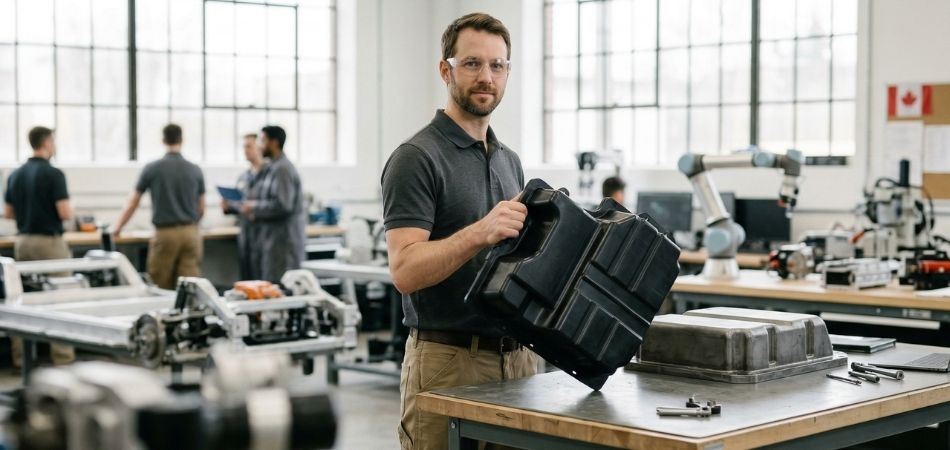
Lightweighting electric vehicles is the most proven strategy to maximize battery range and reduce manufacturing costs. By replacing heavy metal components with advanced thermoformed plastics, automotive engineers can shed hundreds of pounds from a vehicle’s curb weight. This transition to lightweight polymers significantly improves energy efficiency, mitigates range anxiety, and lowers tooling expenses for mid-volume production runs.
Why Is Automotive Weight Reduction Critical for EV Range?
Electric vehicle batteries are incredibly heavy. This massive weight forces the electric motors to work harder to accelerate the vehicle. The harder the motors work, the faster the battery drains.
Automakers must offset this battery mass by aggressively cutting weight elsewhere in the chassis and body. Every pound you remove from the vehicle directly translates to increased miles per charge. This process of lightweighting electric vehicles is essential to overcoming consumer range anxiety.
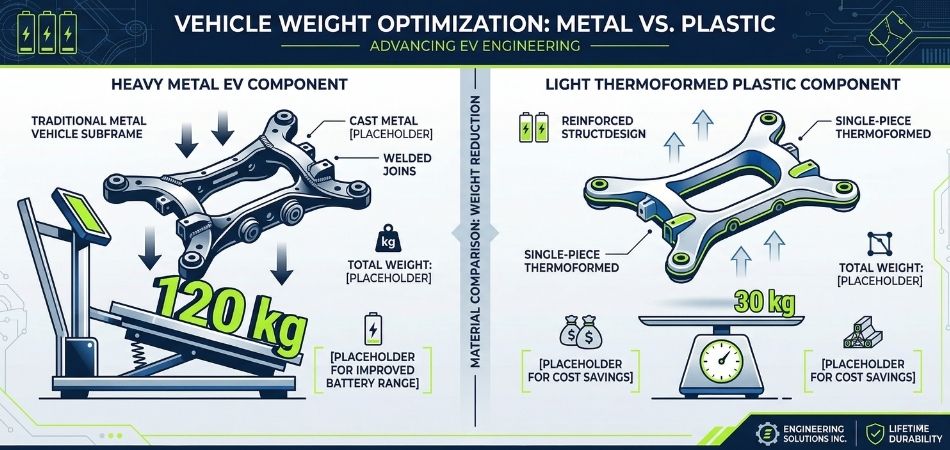
Metals like steel and standard aluminum simply carry too much mass for optimized EV design. Engineers are now turning to specialized thermoplastics. These advanced polymers offer the required structural integrity while weighing a fraction of their metal counterparts.
Which Metal EV Parts Are Being Replaced by Formed Plastics?
You cannot replace a motor block with plastic. You can, however, replace non-load-bearing structural components and protective housings. The shift away from metal is happening rapidly in several key areas of the vehicle.
Here are the most common components targeted for plastic replacement:
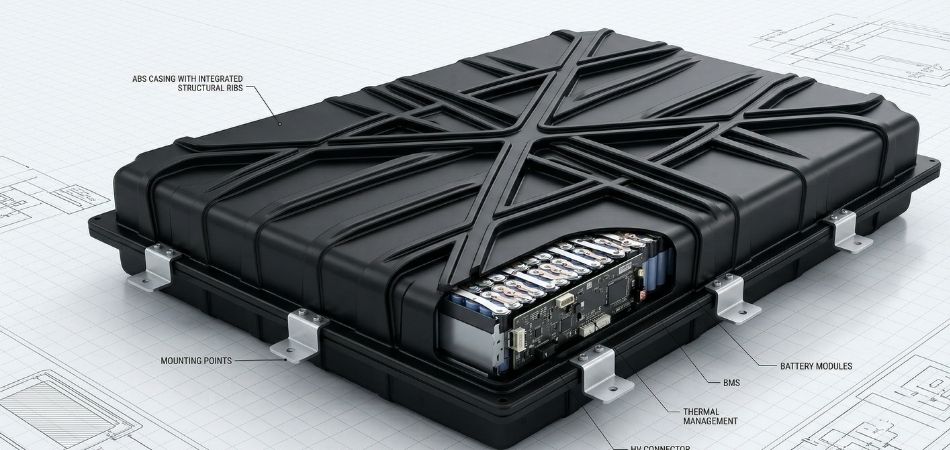
- EV Battery Enclosures: Heavy steel battery boxes are being replaced by fire-retardant formed plastics. This saves massive amounts of weight while providing excellent electrical insulation.
- Underbody Shields: Thermoformed plastic skid plates protect the battery pack from road debris without adding the extreme weight of metal plates.
- Interior Trim and Seating Structures: Automakers use ABS plastic and polycarbonate blends to create rigid, lightweight seat backs and dashboard supports.
- Fender Liners and Splash Guards: High-impact plastics handle rock strikes and road salt much better than metal, all while keeping the vehicle light.
How Do Plastics Compare to Metals in EV Manufacturing?
When engineering parts for an electric car, you must balance weight, cost, and performance. Let us examine exactly how thermoformed plastics compare to traditional metals.
| Manufacturing Factor | Traditional Metal (Steel/Aluminum) | Thermoformed Plastics |
|---|---|---|
| Component Weight | Extremely heavy (Decreases battery range). | Up to 50% lighter than aluminum. |
| Tooling Costs | Very high (Expensive steel stamping dies). | Very low (Cost-effective aluminum or composite molds). |
| Corrosion Resistance | Prone to rust and galvanic corrosion. | 100% resistant to rust and road salt. |
| Electrical Insulation | Highly conductive (Requires extra shielding). | Natural insulator (Safer for high-voltage battery proximity). |
Does Replacing Metal Compromise Vehicle Safety?
Many people assume that plastic is inherently weaker than metal. This is a dangerous misconception in modern engineering. Specialized automotive polymers offer an incredibly high specific strength.
Specific strength measures a material’s strength relative to its density. Thermoformed plastics absorb kinetic energy remarkably well during an impact. Instead of transferring crash energy directly into the cabin, flexible plastics shatter or deform to dissipate the force.
Furthermore, plastics do not create sharp, lethal shrapnel in the same way tearing metal does. When you select the correct material, lightweighting electric vehicles actually enhances passenger safety while improving overall handling and braking distances.
What Are the Cost Benefits of Thermoforming Over Metal Stamping?
Tooling up for metal stamping is a multimillion-dollar investment. This makes sense if you are producing millions of identical cars. The EV market, however, is constantly evolving with frequent design updates and specialized models.
Thermoforming and vacuum forming offer a massive financial advantage. The molds used to shape plastics are significantly cheaper to produce than metal stamping dies. This makes plastic forming ideal for automotive manufacturing solutions that require agility and cost control.
If you are developing a new component, you can iterate your designs faster and cheaper with plastics. You also gain the ability to consolidate multiple metal parts into a single, seamless plastic molding. To understand which material fits your specific application, you must evaluate the differences between options like HIPS, ABS, and Polycarbonate.
Are You Ready to Optimize Your EV Component Production?
Lightweighting electric vehicles is no longer an optional engineering pursuit. It is a strict requirement for staying competitive in the modern automotive market. Shedding weight is the only way to deliver the driving range and efficiency that consumers demand.
By transitioning from heavy metals to custom formed plastics, you can reduce manufacturing costs, eliminate corrosion, and improve vehicle safety. The engineering team at BLG is ready to help you navigate this transition.
Do you need help designing lightweight, durable plastic components for your next vehicle platform? Contact us today to discuss your project requirements and discover the perfect polymer solution for your manufacturing line.
If you are comparing fiberglass manufacturers for a US order, BLG handles the customs paperwork, duty treatment and freight into the US.
