

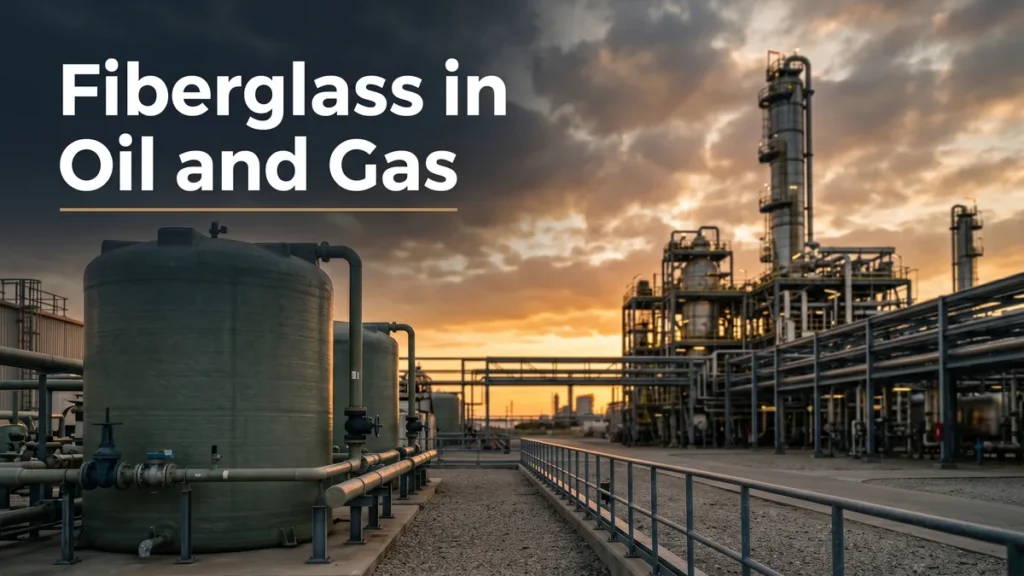
Corrosion is one of the costliest problems in heavy industry, and few sectors feel it more than oil and gas, where equipment lives in saltwater, sour service, and aggressive process chemistry. That is why fiberglass reinforced plastic, or FRP, has moved from a niche substitute to a mainstream material across upstream, midstream, and downstream operations. Unlike carbon steel, fiberglass does not rust, and a properly engineered laminate can run for decades in environments that eat metal. BLG produces these components using hand lay-up and other composite processes built for industrial service.
This article walks through five places fiberglass earns its keep in oil and gas. The focus throughout is corrosion resistance, the single property that most often justifies the switch from steel.
In this article
Why fiberglass beats steel on corrosion
Engineering note: This article is general guidance for industrial buyers and fabricators. It is not a substitute for project-specific engineering. The right process, resin system, and laminate schedule depend on your loads, chemistry, temperature, and the standards that govern your application. Confirm any material or process decision with a qualified composites engineer and the relevant code (for example ASTM, ASME RTP-1, or NACE/AMPP) before you commit to production.
Fiberglass reinforced plastic is a composite of glass reinforcement bound in a thermoset resin. The resin matrix is what faces the chemistry, and it is inert to a wide range of acids, caustics, salts, and produced fluids that corrode carbon steel. There is no oxidation reaction to feed, so the material does not rust, scale, or pit the way metal does. That alone changes the maintenance math on a facility.
Resin selection drives the chemical resistance. Isophthalic polyester handles general service, while vinyl ester is the workhorse for the harsher acids and oxidizers common in oil and gas, and specialized novolac systems push further still. Standards bodies such as AMPP, the association formed from NACE and SSPC, publish the corrosion guidance that engineers lean on when they qualify a material for a service.
Did you know: FRP is roughly a quarter the weight of steel
Fiberglass laminates weigh far less than carbon steel of equivalent function, often around a quarter of the weight. In oil and gas that lighter weight cuts crane and rigging costs, eases offshore deck-load limits, and lets smaller crews handle spools and panels by hand. The corrosion resistance gets the headlines, but the weight saving is a real part of the total-cost story.
1. Piping and process lines
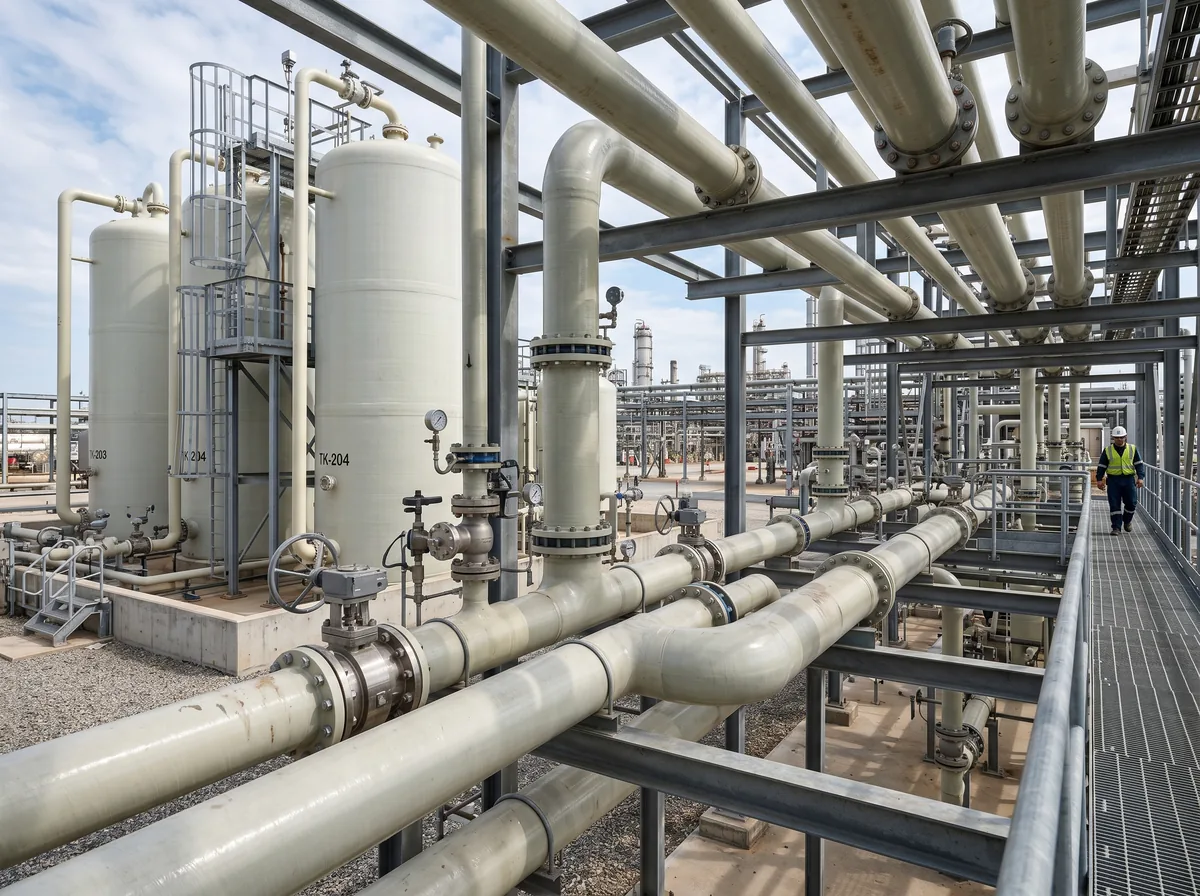
FRP piping is one of the most widespread uses of fiberglass in the sector. It carries produced water, brine, firewater, crude gathering lines, and a range of process fluids without the internal corrosion and external rusting that drive steel-pipe replacement. Because the pipe will not scale on the inside, flow stays predictable over a long service life.
Engineers design these systems to pressure and temperature ratings using established codes, with pressure piping commonly referencing ASME codes and standards. The result resists chlorides and weak acids, weighs less to install, and avoids the recurring cost of internal coatings and cathodic protection that steel demands.
2. Storage tanks and vessels
Storage tanks for produced water, brine, chemicals, and treatment fluids are a natural fit for fiberglass. A vinyl ester corrosion barrier on the inside faces the aggressive contents while a structural laminate behind it carries the load. Steel tanks in the same service need internal linings and ongoing inspection for under-film corrosion, which an FRP tank built to a recognized standard sidesteps.
For shop-built corrosion-resistant tanks and vessels, fabricators often work to ASME RTP-1. Because the corrosion barrier and the structural wall can be tuned independently, custom composite fabrication, including resin transfer molding for the right geometries, suits this work.
Save your budget: count the lifecycle, not the sticker
An FRP tank or pipe spool can cost more up front than mild steel, which is where many buyers stop comparing. The full picture includes the linings, recoating, cathodic protection, inspection, and downtime that steel needs in corrosive service, none of which the fiberglass requires in the same way. Over a 20 to 30 year life, the corrosion-resistant option frequently wins on total cost. Ask for a lifecycle comparison, not just the purchase price.
3. Scrubbers, ducting, and stacks
Gas treating and emissions equipment exposes surfaces to wet, acidic, and sometimes sour conditions that punish metal. Fiberglass scrubbers, absorber towers, ducting, and stack liners stand up to the condensed acids and humidity that drive rapid corrosion in carbon and even stainless steel. The smooth resin-rich interior also resists fouling, which helps maintain throughput.
These are often large, custom-contoured parts, which plays to the strength of open-mold fabrication. Where one face must be finished or volumes rise, fabricators may turn to sheet molding compound or other closed-mold methods.
4. Gratings, walkways, and structures
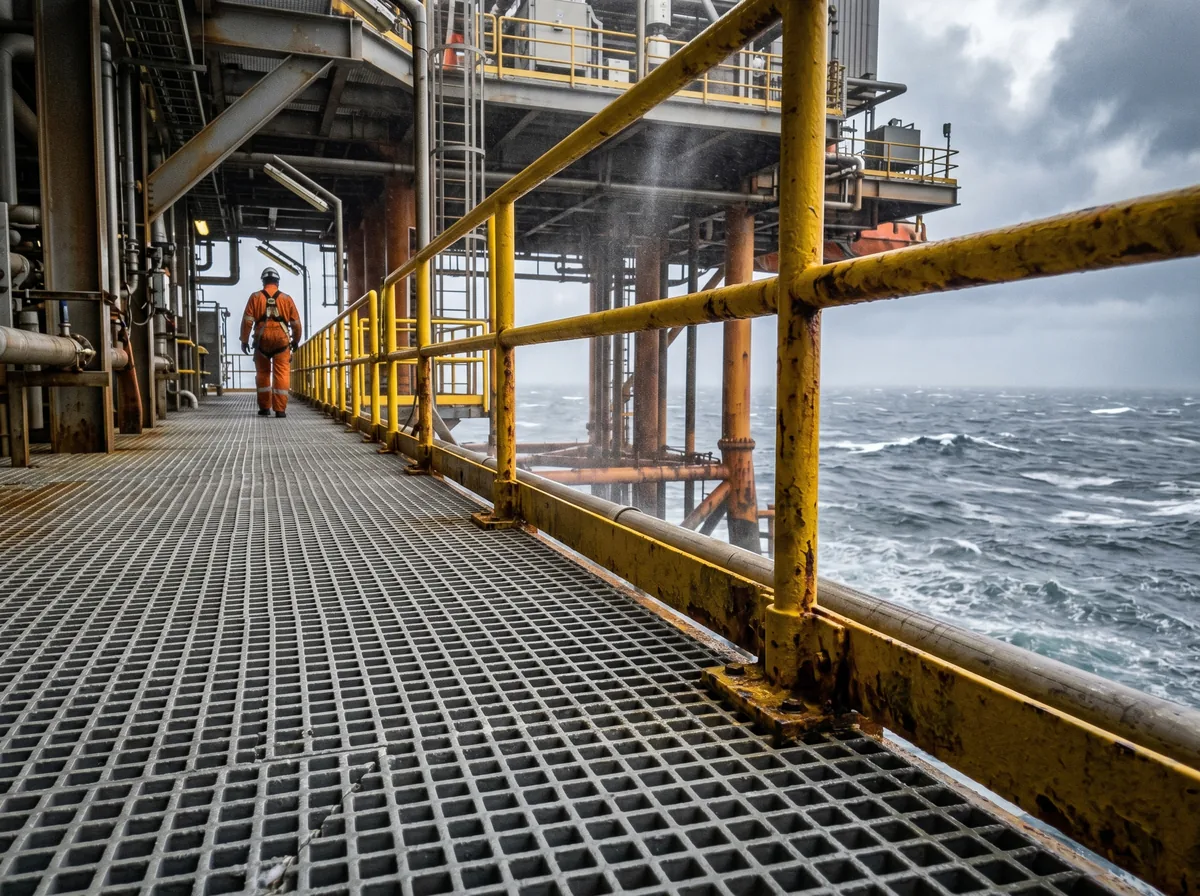
Non-process structures matter too. FRP gratings, handrails, ladders, cable trays, and platform structures replace galvanized steel in splash zones, around tank farms, and on offshore decks where salt spray corrodes metal quickly. The material is non-conductive and non-sparking, which adds a safety advantage in classified areas, and it stays slip-resistant and maintenance-light for years.
Red flag: do not treat fire performance as an afterthought
Composites in a hydrocarbon facility must meet fire and flame-spread requirements for the area where they are installed. Not every resin system qualifies, and substituting a standard laminate into a rated location is a serious mistake. Specify the fire rating and the governing standard up front, and confirm the fabricator can supply test documentation. When in doubt, involve your facility fire-protection engineer before you buy.
5. Offshore and produced-water handling
Offshore is where corrosion resistance and weight savings compound. Seawater is relentless on steel, and every kilogram counts against deck-load limits. Fiberglass shows up offshore as firewater and seawater piping, produced-water tanks, treatment skids, caissons, and J-tubes, applying the same corrosion logic that protects an onshore tank to a far more aggressive marine setting.
The engineering crosses over with other sectors: the same discipline behind durable marine fiberglass components and large wind turbine structures carries directly into offshore oil and gas hardware.
How to specify FRP for corrosive service
Getting the corrosion resistance you expect comes down to a few specification choices. Get these right with your fabricator and the material delivers; get them wrong and even fiberglass can disappoint.
- Match the resin to the chemistry. Polyester for general duty, vinyl ester for harsher acids and oxidizers, specialty resins for the worst cases. The resin, not the glass, faces the fluid.
- Specify a true corrosion barrier. A resin-rich, reinforced inner layer is what protects the structural laminate. Do not let it be value-engineered away.
- Name the governing standard. ASME RTP-1 for corrosion-resistant tanks and vessels, the relevant ASME piping code for pressure lines, and AMPP corrosion guidance for material qualification.
- Define the fire and temperature limits. Confirm flame-spread ratings for the install location and the maximum service temperature for the resin you select.
- Document fabrication quality. Glass content, cure, and void control decide real-world life. Ask how each is verified.
If you are weighing FRP against steel for a corrosive line, tank, or structure, our team can help you map the resin, laminate, and standard to your service before anything goes into production.
Sources and further reading
- AMPP (Association for Materials Protection and Performance, formed from NACE and SSPC), corrosion control guidance (ampp.org).
- ASME, codes and standards including ASME RTP-1 for reinforced thermoset plastic corrosion-resistant equipment (asme.org).
- ASTM International, composite materials standards and test methods (astm.org).
- BLG Fiberglass, in-house fabrication experience with industrial corrosion-resistant FRP.
- Strongwell MC, “Corrosion Resistance” (video, embedded above).
Frequently asked questions
Why is fiberglass used instead of steel in oil and gas?
Fiberglass is used mainly because it does not corrode. Oil and gas equipment lives in saltwater, brine, produced water, and aggressive process chemistry that rust and pit carbon steel and can even attack stainless. A properly engineered FRP laminate resists those conditions for decades without the linings, recoating, and cathodic protection that steel needs. Fiberglass is also roughly a quarter of the weight of steel, which lowers handling, rigging, and deck-load costs, and it is non-conductive and non-sparking, which adds safety in classified areas. The combination of corrosion resistance, light weight, and low maintenance is what drives the switch.
How long does FRP equipment last in corrosive service?
Well-designed and well-fabricated FRP equipment commonly lasts 20 to 30 years or more in corrosive oil and gas service, often outliving the steel it replaced. The life depends on getting the specification right: the resin must match the chemistry, the corrosion barrier must be genuine and resin-rich, and fabrication quality such as glass content, cure, and void control must be sound. Operating temperature also matters, since each resin has a maximum service limit. When those factors line up, fiberglass delivers a long, low-maintenance life that makes the lifecycle cost attractive even when the purchase price is higher than steel.
Is fiberglass safe to use around hydrocarbons and fire risk?
It can be, but fire performance must be specified deliberately. Composites in hydrocarbon facilities have to meet flame-spread and fire ratings for the area where they are installed, and not every resin system qualifies. The correct approach is to define the required fire rating and governing standard up front, choose a resin system that meets it, and confirm the fabricator can supply test documentation. Substituting a standard laminate into a fire-rated location is a serious error. For any safety-critical or classified area, involve your facility fire-protection engineer before selecting the material.
Which resin should I choose for corrosion-resistant FRP?
The resin choice follows the chemistry the part will face. Isophthalic polyester handles general-duty corrosion such as mild salts and water service at a lower cost. Vinyl ester is the common workhorse for the harsher acids and oxidizers found across oil and gas and offers a strong balance of chemical resistance and value. For the most aggressive chemistries, specialty systems such as novolac vinyl esters push the limit further. Because the resin matrix is what actually contacts the fluid, this decision matters more than the glass. Share your service conditions with your fabricator and qualify the resin against corrosion guidance before production.
Key takeaways
- Fiberglass resists corrosion because the resin matrix is inert to many oilfield chemistries, so it does not rust, scale, or pit like steel.
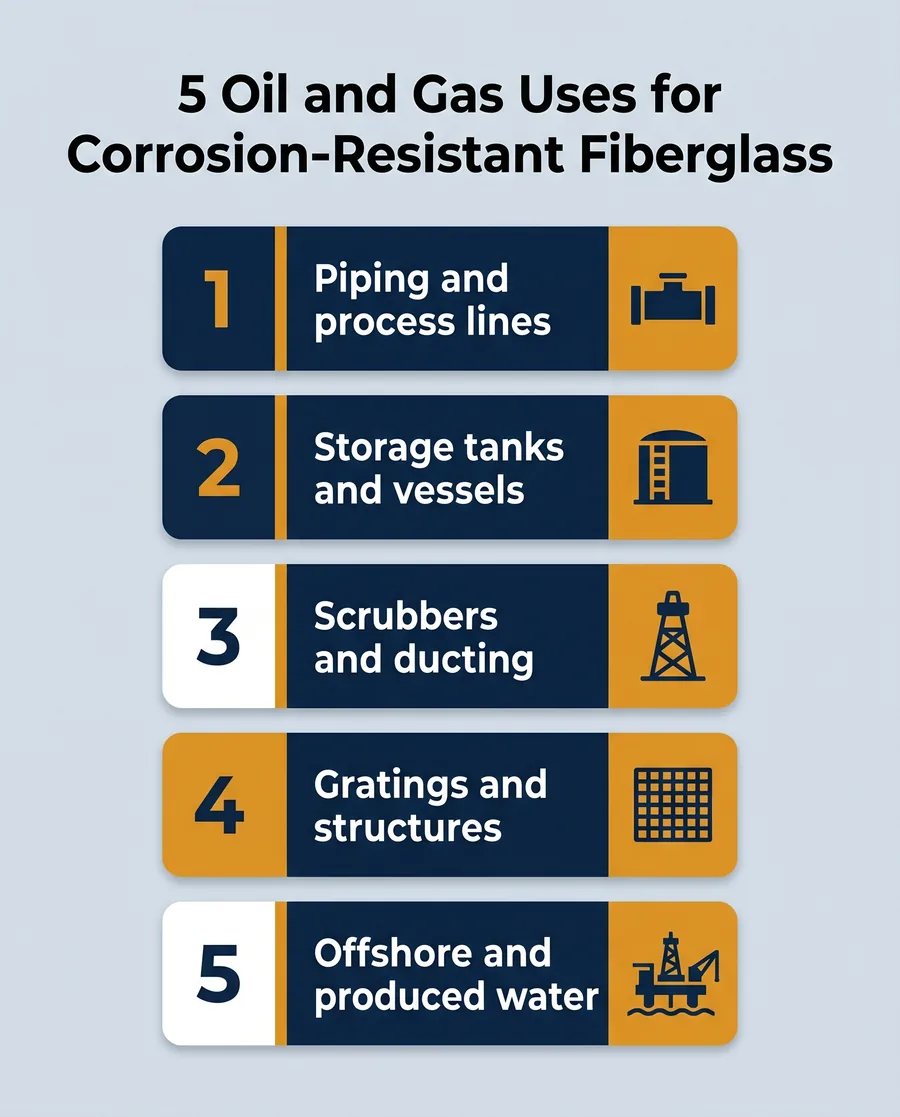
- Five high-value uses: piping, tanks and vessels, scrubbers and ducting, gratings and structures, and offshore systems.
- Match resin to chemistry, specify a real corrosion barrier, name the standard, and compare on lifecycle cost, not sticker price.
Download the free quick guide
A one-page reference for specifying corrosion-resistant fiberglass equipment in oil and gas service.
Replacing corroding steel in your facility?
BLG Fiberglass fabricates custom corrosion-resistant FRP equipment for oil and gas, chemical, and industrial operations across North America. Tell us your service conditions and contact our fabrication team for a recommendation on resin, laminate, and the right standard for your application.
If you are comparing fiberglass manufacturers for a US order, BLG handles the customs paperwork, duty treatment and freight into the US.
