
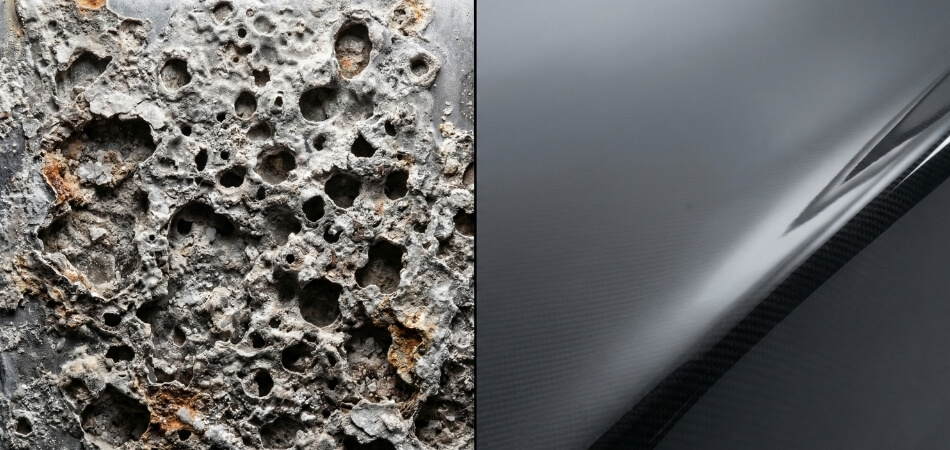
When evaluating fiberglass vs aluminum corrosion, marine and industrial experts are increasingly choosing fiberglass because it completely eliminates galvanic and chemical degradation. Aluminum requires constant maintenance to prevent pitting and oxidation in saltwater or chemical environments. Fiberglass composites provide a permanent, zero-rust solution that drastically reduces long-term maintenance costs and extends the lifespan of critical infrastructure.
We all know the frustration of watching expensive equipment slowly degrade. You invest heavily in infrastructure, only to see saltwater and chemicals eat away at it year after year. For decades, aluminum was the standard lightweight choice for boats and industrial platforms. However, modern engineering is shifting gears.
Today, facility managers and marine architects are looking for materials that actually last. They want to stop painting, patching, and replacing metal parts. Let us explore exactly why the industry is leaving aluminum behind.
Why does aluminum corrode in marine environments?
Aluminum is naturally reactive. It relies on a thin, invisible layer of aluminum oxide to protect itself from the elements. When this layer is breached, problems begin immediately.
In saltwater environments, chloride ions aggressively attack this protective oxide layer. This leads to pitting, which is a localized form of corrosion that creates deep holes in the metal. Once pitting starts, the structural integrity of the component plummets rapidly.
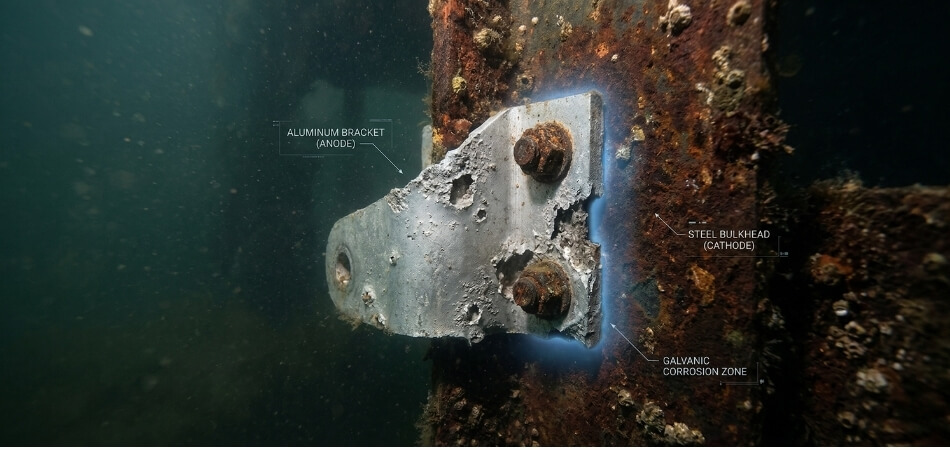
Another massive issue is galvanic corrosion. This happens when two different metals are in electrical contact while submerged in a conductive fluid like seawater. If aluminum touches steel or copper, the aluminum acts as an anode and sacrifices itself, dissolving into the water.
To understand the specific electrochemical reactions at play, you can review the detailed mechanics of galvanic corrosion from authoritative scientific sources. The bottom line is that keeping aluminum safe requires constant vigilance and expensive sacrificial anodes.
How does fiberglass prevent galvanic corrosion?
This is where fiberglass completely changes the equation. Fiberglass is an insulator, not a conductor. It does not conduct electricity, which means the galvanic process simply cannot occur.
When you use fiberglass vs aluminum corrosion is no longer a daily concern. You can bolt fiberglass parts directly to steel vessels or copper pipes without worrying about an electrochemical reaction destroying your investment. This makes it an incredibly safe and stable choice for complex marine assemblies.
Furthermore, fiberglass relies on advanced polymer resins. For extreme environments, manufacturers use vinyl ester or epoxy resins that are entirely impervious to chloride ions. These resins form a solid, non-reactive matrix around the strong glass fibers. If you are evaluating different composites for your specific project environment, understanding the different types of fiberglass and their corresponding resins is a great place to start.
Here are the core reasons fiberglass outperforms metals in water:
- Zero electrical conductivity: Prevents all galvanic degradation.
- Chemical inertness: Saltwater cannot penetrate the resin matrix.
- No protective coatings needed: The material is inherently resistant, requiring no paint or clear coats to survive.
- Seamless construction: Parts can be molded in one piece, eliminating vulnerable joints and welds.
What is the cost difference between fiberglass and aluminum over time?
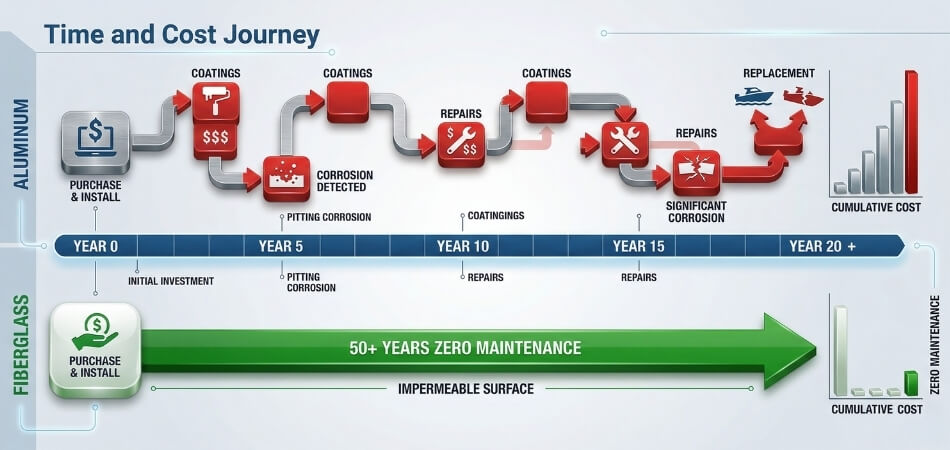
The initial purchase price of aluminum might seem attractive. However, smart procurement officers look at the total cost of ownership. The true cost of a material includes maintenance, repairs, and eventual replacement.
Aluminum requires a strict maintenance schedule. You have to constantly inspect welds, replace sacrificial anodes, and reapply protective marine coatings. These labor and material costs add up dramatically over a ten year period.
If you want to see a direct breakdown of these costs, check out our comprehensive aluminum vs fiberglass corrosion guide. Fiberglass requires almost zero preventative maintenance. You install it, and it performs.
Let us look at a direct comparison between the two materials over a 20 year lifecycle:
| Factor | Aluminum | Fiberglass |
|---|---|---|
| Initial Cost | Moderate | Moderate to High |
| Maintenance Needs | High (Anodes, Coatings, Weld Inspections) | Virtually None (Basic Cleaning) |
| Lifespan in Saltwater | 10 to 15 years (Requires upkeep) | 50+ years |
| Galvanic Risk | Extreme | Zero |
| Total ROI (20 Years) | Low (High recurring costs) | Exceptional (Install and forget) |
Which material is better for industrial chemical plants?
Marine environments are tough, but industrial chemical plants are often worse. Facilities handling acids, bases, and harsh solvents need materials that will not dissolve under pressure. Fiberglass vs aluminum corrosion battles are common here, and fiberglass wins decisively.
Aluminum reacts violently with many industrial chemicals, especially strong alkalis and certain acids. An accidental chemical spill can compromise an aluminum grating or walkway in a matter of hours. This presents a massive safety hazard for your workers.
Industrial composite structures are formulated with specific resins designed to handle exact chemical profiles. You can customize the fiberglass to resist sulfuric acid, sodium hydroxide, or harsh organic solvents. This level of customization is simply impossible with standard metal alloys.
For large scale industrial applications, especially in fluid management, composites are the new standard. To learn more about how these parts are made for heavy industry, explore our dedicated section on marine and industrial fiberglass manufacturing. We help businesses design components that outlast the facilities themselves.
Are you ready to eliminate rust and maintenance?
The evidence is clear. Sticking with legacy metals means accepting a cycle of constant repair and inevitable replacement. The switch to advanced composites is a strategic move to protect your assets and your budget.
Whether you are designing a new fleet of vessels or upgrading an offshore oil and gas platform, choosing the right material is critical. Fiberglass offers the structural strength you need with the permanent corrosion resistance you want.
If you are tired of battling rust and oxidation, it is time to upgrade. Stop paying for temporary metal fixes and start investing in permanent composite solutions.
